A Lit Box at the Corner: How Japan’s Wall-Side Vending Machines Become Nighttime Landmarks
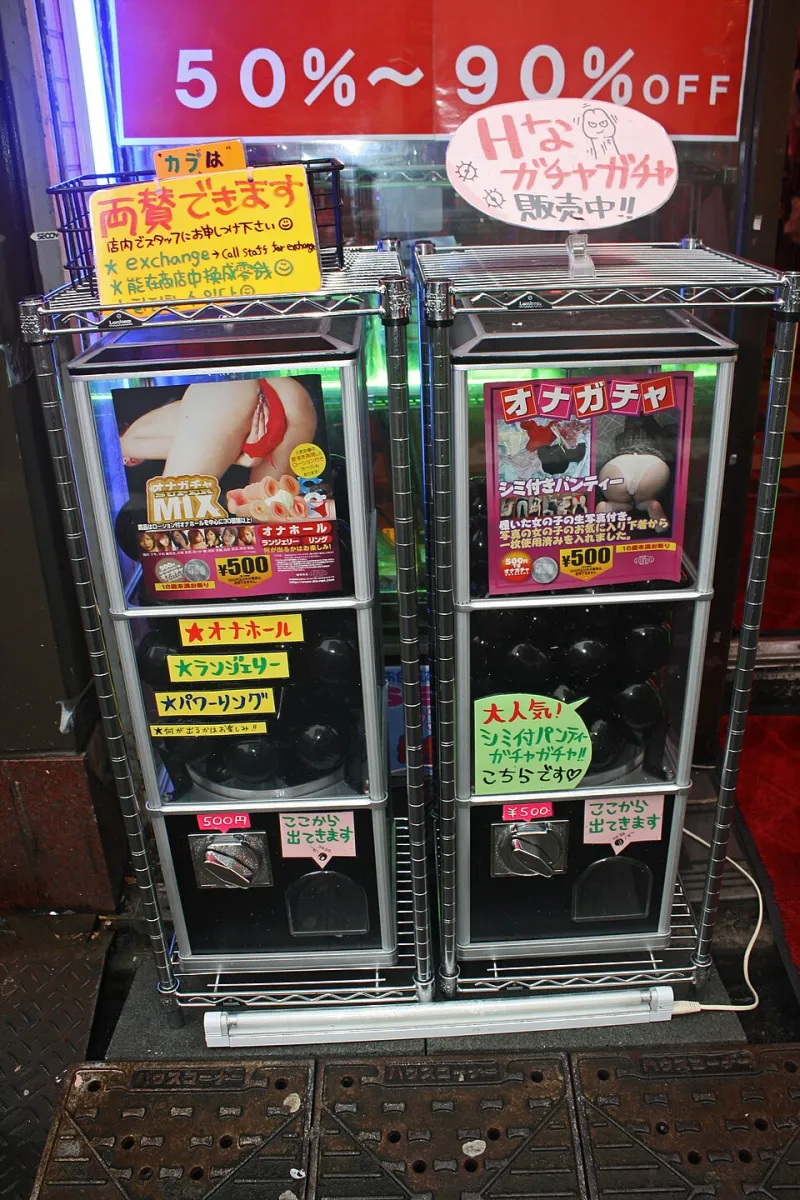
Photo: istolethetv, CC BY 2.0, via Wikimedia Commons
At 9:40 on a late-November night, the brightest thing on the street is a vending machine. It is pressed against the wall of a low apartment building, set back just enough to leave a dry strip of pavement underneath. The machine hums. Its front panel throws a pale rectangle of light across the asphalt, catching the edge of a drainage grate and the corner of a bicycle cover. There is no clerk, no door, no sign announcing a store. Just a lit box at the edge of a wall, doing its small, steady job.
In Japan, machines like this are ordinary. They are also, if you walk the same streets often enough, memorable. Not because they are beautiful, exactly, but because they become part of how you know where you are. They are the kind of landmark you never put on a map and never quite forget.
The Machine Doesn’t Try to Be a Landmark
A vending machine is not designed to be civic architecture. It sells drinks. It accepts coins and bills. It has a recycling bin beside it, sometimes a small trash slot, sometimes nothing at all. It is practical, repetitive, and almost aggressively unremarkable in daylight.
At night, though, the same machine changes. The glow becomes a fixed point. The hum becomes a kind of presence. You notice it from the far end of a narrow street, not because it is loud, but because it is consistent. It stays in the same place. It does not close. It does not change its expression.
That consistency is what makes it useful. In a neighborhood of dark walls, low hedges, and identical roof lines, a lit machine gives your eye something to hold. It tells you that you have reached the turn before the small bridge, or the block where the street narrows, or the corner where you once dropped a glove and found it again the next morning.
People do this with landmarks everywhere. A certain tree. A blue awning. The house with the ceramic frog by the gate. In Japan, the vending machine joins that informal list. It is not official. It is just there, brightly, at the wall’s edge.
Light Is a Form of Directions
At night, directions change. During the day, you navigate by shape and color: the roofline, the shop sign, the shape of an intersection. After dark, you navigate by light. A porch light. A bus shelter. A convenience store spilling brightness onto the sidewalk. In the United States, it might be a gas station canopy or the sign outside a diner. In a Japanese residential neighborhood, it is often a vending machine.
The light does not need to be dramatic. A vending machine’s glow is small and specific. It illuminates a few feet of pavement, the lower half of a wall, maybe the edge of a parked scooter. That is enough. It marks a spot where the street is not completely dark. It gives you a place to pause, check your phone, adjust a bag, or simply confirm that you are still heading the right way.
There is also the sound. The low electrical hum is easy to ignore until the street is quiet. Then it becomes a kind of company. Not conversation. Not even comfort, really. More like the sound of a refrigerator in a house at night: proof that something is running, that the block has not entirely gone still.
Why the Wall Matters
The placement is the interesting part. These machines are often tucked against a building wall, sometimes under a stairwell, sometimes beside a parking lot, sometimes at the edge of a small shop that has already pulled its shutter down for the night. They occupy the leftover space between private property and public street. Not quite inside. Not quite outside.
That position says something about trust. A machine left out overnight is an invitation, but a limited one. You can approach it. You can buy a drink. You can stand near its light for a minute. You cannot go inside. The wall behind it belongs to someone else. The street in front belongs to everyone. The machine sits in between, a small negotiated presence.
In many Japanese neighborhoods, this arrangement feels ordinary because it is ordinary. The machine is serviced. The trash is managed, or at least expected to be. People use it and move on. The lack of a clerk does not feel like abandonment. It feels like a low-key agreement: the street will be shared, quietly, and mostly with good manners.
That is not a grand philosophy. It is just urban life at the edge of a wall. But it is the kind of thing you notice when you walk instead of drive, and when the same corner becomes familiar over months rather than minutes.
The Small Comfort of a Cold Can
You do not have to buy anything to use a vending machine’s light. That is part of its quiet generosity. You can stand near it while you wait for a friend. You can use its glow to read a label or find a key. You can let its hum fill a silence that would otherwise feel too large.
And if you do buy something, the transaction is small and complete. Coins in. Button pressed. A can drops with a dull clunk. The machine thanks you in a recorded voice, or it does not. Either way, the moment ends. You walk on with a warm coffee or a cold tea, and the machine stays where it was, glowing at the wall.
There is no need to make this more meaningful than it is. A vending machine is not a friend. It is not a community center. It is a machine. But cities are made of such unremarkable things, and the way we move through them is shaped by where the light falls.
Accidental Anchors in Your Own Town
Most places have their own version of this. A Little Free Library on a front lawn. A bus shelter with a scratched plastic window. The ATM vestibule that stays lit after the bank closes. The neon sign above a laundromat. These are not landmarks in the guidebook sense. They are landmarks in the personal sense: places that help you locate yourself on an ordinary evening.
You can start noticing them by asking a simple question: what glows at the edge of my route? What stays put when everything else closes? What do I use, without thinking, to know that I am almost home?
The answers are usually small. That is the point. The vending machine at the wall’s edge is not asking to be admired. It is just doing its job. But after dark, in a quiet neighborhood, doing its job is enough to make it a landmark. You pass it, you notice it, and you keep walking. The wall holds it. The light holds the corner. And for a moment, the street feels a little more legible.