The Space Beside the Wall: How Japanese Homes Use a Forty-Centimeter Gap
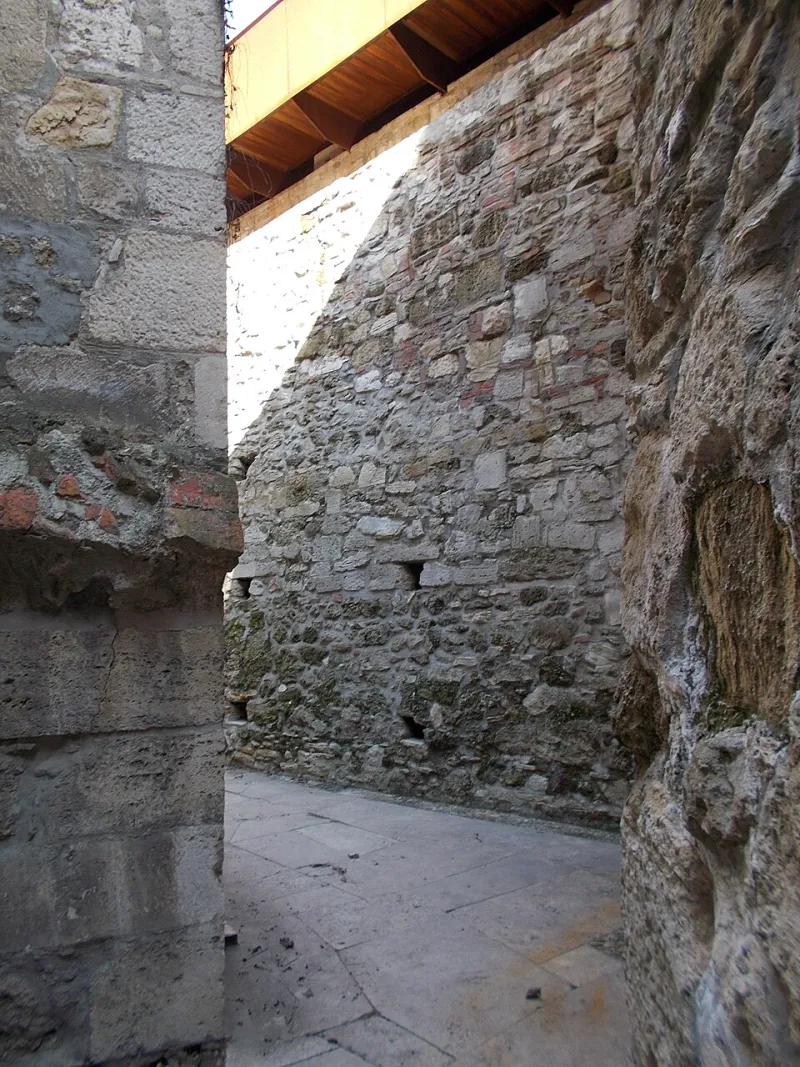
Photo: Globetrotter19, CC BY-SA 4.0, via Wikimedia Commons
On a late-November walk through a residential neighborhood, the houses sit close enough to the street that you can hear a kettle click off inside one and a television murmur in another. Between each home's exterior wall and its boundary fence runs a strip of ground so narrow it barely registers as a yard. Forty centimeters, maybe. Sixteen inches or so. Not enough for a chair, not enough for a child to play, hardly enough for an adult to walk through without turning sideways.
And yet, once you start looking, you see that almost none of these strips are empty.
The Sliver You Learn to See
The first thing you notice is a hose reel, mounted low on the wall or sitting on a small concrete block. Then a broom leaning handle-out, as if someone set it down mid-sweep and meant to come back. A stack of spare roof tiles, bound with twine. A plastic crate holding clothespins and a folded rag. A single potted plant—often a stubborn little shrub or a geranium—placed where it gets the thin afternoon light that slips between the buildings.
None of it is decorative in the way a front garden is decorative. It is not arranged for visitors. It is arranged for use. The narrow side yard becomes a kind of open-air closet, a place for the things that need to be nearby but do not belong inside the house. In a country where storage is often clever and interior space is carefully accounted for, this sliver of ground does quiet, everyday work.
An Inventory Written by Habit
What makes these strips interesting is not the objects themselves. It is the way the objects accumulate according to habit rather than design. A hose reel goes there because the outdoor tap is there. A broom goes there because the leaves gather there. The spare tiles go there because no one wants to throw them away and no one has a better place to put them.
Over time, the side yard becomes a small physical record of the household's routines. You can read a little of the residents' life from it: someone gardens, someone cleans the gutters, someone recently had roof work done, someone likes to keep a pair of garden gloves within reach. The strip is not a showpiece. It is closer to a margin note—small, practical, and easy to ignore unless you are the one who wrote it.
This is part of what makes walking through Japanese neighborhoods so rewarding. The front of a house tells you how it wants to be seen. The side tells you how it is actually lived in.
Storage Without a Storage Room
In US neighborhoods, the space beside a house often has a clearer job. It might be a passage to the backyard, a place for trash bins, or a strip of grass that the mower barely reaches. In newer subdivisions, side yards can be wide enough for a shed or a parked trailer. In older cities, they can be narrow, but they are still usually treated as circulation space—somewhere to walk through, not somewhere to keep things.
The Japanese side yard I am describing is different. It is often too narrow for real circulation and too valuable to leave blank. So it becomes a zone of informal storage, a place where the boundary between house and fence is not a wall but a working edge. The phrase kabe giwa—the edge of the wall—fits well here. The interesting stuff happens at the edge.
There is also a practical reason for the clutter. Japanese lots are frequently small, and the setback between a building and its property line may be minimal. The side strip is not a design feature so much as a leftover. But rather than treating it as useless, residents put it to work. The result is not tidy in a magazine sense. It is tidy in a lived-in sense: everything has a reason to be there, even if the reason is simply that it has always been there.
The Fence Is Not Always a Wall
Another detail worth noticing is how soft the boundary feels. The fence may be a low block wall, a metal railing, or a thin panel of corrugated material. It marks the property line, but it does not always hide the strip completely. From the street, you might see the top of a broom or the curve of a hose reel. From a upstairs window, a neighbor might see the whole small arrangement.
That half-visibility is part of the custom. The side yard is not exactly private, but it is not exactly public either. It sits in a middle zone that Japanese residential neighborhoods often handle with quiet tolerance. People keep their things there because the space is theirs, but they also keep them reasonably neat because the space is seen. The fence does not create a hard separation so much as a gentle agreement about where one household's business ends and another's begins.
The American Side Yard, Reconsidered
For US readers, the useful question is not whether we should start stacking roof tiles beside our houses. It is what we already keep in the margins we have stopped noticing. The strip between a garage and a fence. The gravel path beside the air-conditioning unit. The narrow run behind a hedge where the recycling bin waits until pickup day. These spaces are easy to dismiss as leftover, but they are also where daily life leaves its small evidence.
In Japan, the forty-centimeter gap is not a grand statement about minimalism or design. It is a practical response to tight space, maintained through habit. But that practicality has a reflective side. It reminds us that a home is not only the rooms we decorate. It is also the brooms, hoses, spare parts, and half-forgotten pots we keep at the edges, ready for the next small task.
The Edge Is the Point
Walk past enough of these side yards and you begin to see them as a kind of neighborhood punctuation. They are not the main sentence of the street. They are the commas and dashes—small marks that keep the whole thing readable. A hose reel here. A broom there. A single plant doing its best in a sliver of light.
The next time you pass a narrow gap between a house and a fence, slow down for a second. You may be looking at the most honest part of the property: not the front door, not the garden, but the forty centimeters where someone keeps the things they need.