Hooks, Herbs, and Thirty Centimeters: A Balcony Wall Garden in Japan
Photo: Unknown authorUnknown author, Public domain, via Wikimedia Commons
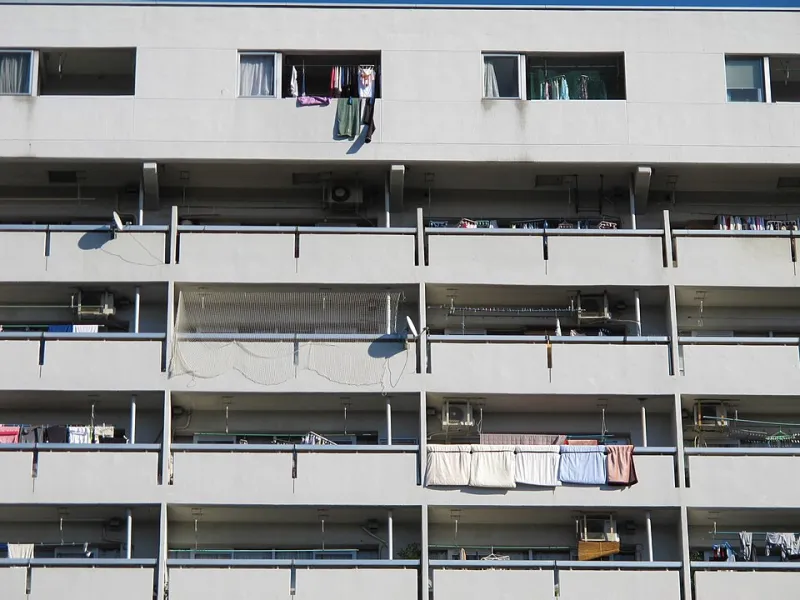
The balcony wall is the least dramatic part of a Japanese apartment. It is usually made of metal panels, a bit of concrete, maybe a frosted glass divider. It does not look like a garden. But if you stand on a small balcony in summer, you notice the wall is doing several jobs at once: holding the boundary, blocking the view, and catching the afternoon light. With a few hooks and a little patience, it can also hold a row of herbs.
This is not the lush balcony gardening you see in glossy magazines. It is smaller than that. It is thirty centimeters of depth, a handful of pots, and a daily check for water. The point is not to produce a harvest. The point is to have something to notice.
What Thirty Centimeters Can Hold
A narrow wall garden works because it asks for very little. A few small pots of mint, shiso, basil, or parsley. A trailing plant like ivy or a small fern. A succulent that does not mind being forgotten. In Japan, you will also see morning glory in summer, trained up a string or a thin trellis, and small pots of chrysanthemum in autumn.
The wall itself becomes the structure. You do not need a large floor plan. You need vertical space, good light, and a way to keep the pots from becoming a hazard. The plants do not need to be rare. In fact, the most successful wall gardens are made of ordinary things that can survive a busy week.
Start With the Wall, Not the Plants
Before you buy a single seedling, look at the wall. Is it metal, concrete, wood, or glass? Is there a railing? Does the balcony get morning sun or late afternoon heat? Is there a drain nearby? Are you allowed to attach anything to the wall at all?
In Japan, many rentals have rules about drilling, hanging, and even placing objects on the balcony. Read your lease or ask the building manager. In the US, renters should check their lease and any HOA rules. A good wall garden is reversible. It should come down without leaving a mark.
The simplest setup is a tension rod between two walls, with S-hooks holding lightweight pots. Another option is an over-the-rail planter, provided it is secure and does not drip onto the neighbor below. Freestanding shelves are useful if you cannot attach anything. Adhesive hooks can work for very light items, but they are not a good choice for wet pots in summer heat. When in doubt, choose the method that fails safely.
Hooks, Rails, and Rental-Safe Hardware
A wall garden is only as good as its hardware. In Japan, you will find small balcony-specific hooks, magnetic clips, and rails designed for apartment walls. Some are made to hold a single small pot; others support a narrow shelf. The best ones have a low center of gravity and a lip that keeps the pot from sliding.
If you are adapting the idea to a US apartment, look for railing planter brackets, tension rods, and vertical felt pockets. Avoid hanging heavy ceramic pots above a walkway. Use plastic or lightweight resin pots. Add a drip tray to every pot, and empty the tray after rain. If your balcony is windy, move trailing plants away from the railing so they do not whip against the neighbor’s side.
Weight matters more than you think. Wet soil is heavy. A row of small pots is fine; a row of large ones is not. Distribute the load. Check the hardware after storms. A wall garden should not become a maintenance project for the person below you.
The Neighborly Arithmetic of Water and Wind
Balcony gardening in Japan is a lesson in invisible neighbors. You may never meet the person below you, but your watering can affects their drying laundry. You may not see the person next door, but your trailing ivy can cross the divider. The etiquette is simple: keep your plants on your side, keep your water in your pots, and keep your walkway clear.
Water early in the morning or late in the evening so the leaves dry before the heat. Use a small watering can, not a hose. If your balcony has a drain, direct excess water toward it. If it does not, use a tray and empty it. Do not let soil wash into the shared corridor.
Wind is the other neighbor. In typhoon season, or during a strong afternoon storm, bring small pots inside or move them to the floor. A wall garden is not a permanent installation. It is a temporary arrangement that you renew each season.
A Small Daily Practice
The wall garden becomes interesting because it asks for attention. You check the soil before you leave for work. You turn a pot so the leaves grow evenly. You notice that the mint is trying to escape its container, or that the morning glory has found the string. These are small things, but they anchor the day.
In a city, it is easy to live at eye level with screens and train announcements. A balcony wall garden pulls your gaze up and out. It gives you a reason to open the sliding door. It makes the weather personal. You do not need a large garden to feel this. You need one pot that needs water and a wall that can hold it.
Adapting the Idea to a US Apartment
US apartment dwellers can borrow the structure without copying the exact hardware. Start with a rental-friendly railing planter or a tension rod. Choose herbs that suit your light. If your balcony is shady, try mint or parsley. If it is hot and bright, try rosemary or succulents. If you have no balcony at all, a sunny windowsill can hold a smaller version of the same idea.
Check your lease before hanging anything. Keep pots lightweight. Use drip trays. Avoid blocking the fire escape or the path to the door. And talk to your neighbors if you are unsure. A quick conversation about dripping water is easier than a note taped to the door.
The Japanese balcony wall garden is not a trend. It is a practical response to small space. But it is also a quiet habit of care. Thirty centimeters is not much. It is enough for a few leaves, a little shade, and a daily reminder that something small is growing on your side of the wall.