The Sound of Someone Else's Futon: Living at the Edge of the Wall in Japan
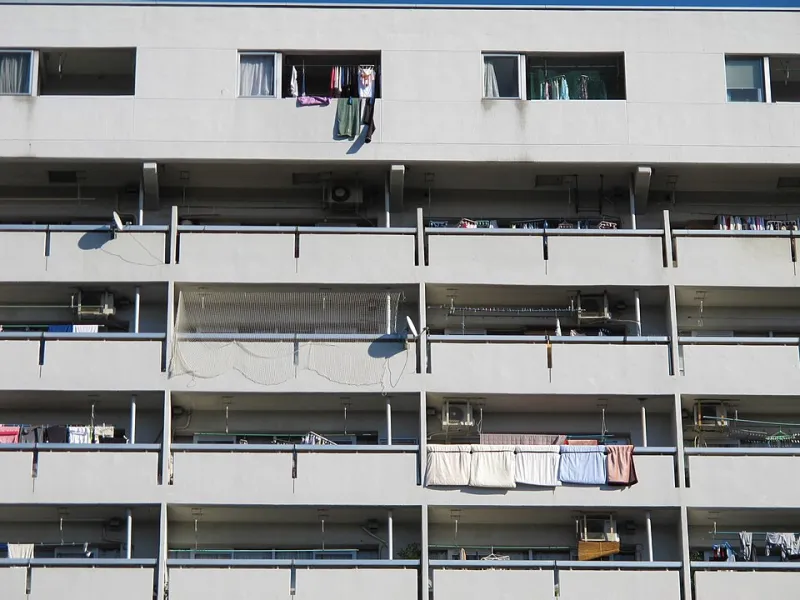
Photo: Sgroey, CC BY-SA 4.0, via Wikimedia Commons
In Japanese, kabe giwa means the edge of the wall. It is the place where one room stops and another begins. It is also the name of this blog, which feels appropriate, because I have spent the last few years living at the wall edge of a small apartment building, learning the sounds of my neighbors without ever learning their names.
The walls here are thin. Not纸-thin, exactly, but thin enough that the building has a soundtrack. I know when the neighbor upstairs watches variety shows because the laughter arrives through the ceiling a half-second before the punchline. I know when the woman next door is on the phone because her voice rises at the end of sentences. I know the exact moment someone two doors down decides to beat a futon.
At first, I thought of this as an annoyance. Now I think of it as urban intimacy with the volume turned low.
An Apartment With Ears
In the US, apartment living often comes with a certain expectation of insulation. You might hear a vacuum, a dog, a bass line. You might leave a note. You might complain. In Japan, the expectation is a little different. The walls are what they are. The building is close. Etiquette is not silence; it is the management of noise.
So you learn to listen in a particular way. You hear the rice cooker click on. You hear a sliding door close. You hear the soft clink of dishes at 9 PM and guess that someone is washing up before bed. These sounds do not make a story on their own. Together, they make a kind of quiet theater.
The futon is the star. In many Japanese apartments, bedding gets aired over the balcony railing, and before that, it gets beaten. The sound is rhythmic and slightly violent: thump, thump, thump. The first time I heard it, I thought someone was doing construction. Then I looked out and saw a quilted rectangle hanging over a railing, sun on its back, and understood.
The Futon Thump
There is something funny about the futon thump. It is aggressive and domestic at the same time. It says: I am here, I am awake, and I am maintaining my life. It is not a cry for help. It is not a greeting. It is housekeeping with percussion.
I have come to think of it as a neighborhood heartbeat. On a good week, I hear it on Tuesday and Saturday. On a bad week, the futon stays inside. I do not know why. Rain, travel, illness, laziness—all are possible. The wall does not explain.
This is the limit of acoustic knowledge. You learn a lot and almost nothing. You know your neighbor watches enka records at low volume. You do not know if they are lonely or happy. You know they cough in the morning. You do not know if they have seen a doctor. The wall gives you fragments, and your imagination fills in the rest, often incorrectly.
I once thought the person upstairs had a small dog. It turned out to be a squeaky chair. I once thought the person next door was arguing with someone. It was a television drama. The wall is a bad narrator. That may be its best quality.
Enka at Low Volume
Downstairs, someone plays enka. The songs arrive through the floor like weather—old melodies, tremolo vocals, a style of Japanese ballad singing that sounds like it has been carried a long way. I do not know the titles. I do not need to. The mood comes through anyway: wistful, steady, a little dramatic.
The volume is always low. This is the etiquette. You can hear it, but you are not invited to comment on it. The neighbor is not performing for me. They are living their life at a reasonable volume, and I am living mine, and the wall is the place where those two lives overlap.
For a US reader, this may sound like a lack of privacy. In some ways it is. But privacy in a Japanese apartment is not the same as soundproofing. Privacy is the agreement not to listen too hard. It is the decision not to knock on the wall when the TV is a little loud. It is the shared understanding that everyone is making noise, and everyone is also tolerating noise.
The Etiquette of Not Knowing
There is a tenderness to this arrangement that I did not expect. When I hear the neighbor’s late-night TV, I do not think of intrusion. I think: someone is still awake. When I hear the futon thump, I think: someone is taking care of their bedding. When I hear silence, I notice it.
The wall edge is not a place of perfect intimacy. It is a place of near-misses. You hear a cough and wonder if you should worry. You hear a laugh and wonder what was funny. You hear a door close and wonder if someone is leaving for good. You do not ask. You are not supposed to ask. That is the etiquette, and it is also the mercy.
In New York or Chicago, thin walls are often treated as a failure of the building. In Japan, they are a condition of city life. That does not make them good. It makes them ordinary. And ordinary closeness can be its own kind of comfort. You are not alone. You are simply at the edge of someone else’s wall.
What the Wall Edge Gives You
The blog is called Kabe Giwa because the wall edge is where the interesting things happen. It is where the private becomes faintly public. It is where you learn that the city is made of soft collisions: a futon, a phone call, a television laugh, a song you almost recognize.
I still put in earplugs sometimes. I still wish the walls were thicker. But I have also started to listen differently. The sounds are not interruptions. They are evidence. Someone is cooking. Someone is watching. Someone is beating the dust out of a futon and hanging it in the sun.
Tonight, the TV will murmur through the wall. Tomorrow, the futon will thump. I will make my own small noises, and the neighbor will hear them, and neither of us will say a word. That is the quiet theater of everyday life at the wall edge.