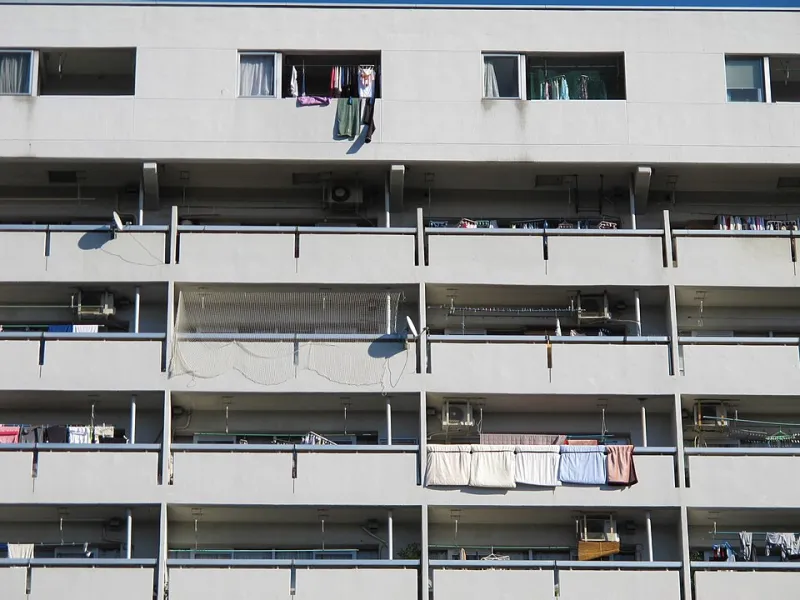
Five Minutes Before Breakfast: The Quiet Morning Ritual That Holds a Japanese Block Together
Photo: Steve Jurvetson, CC BY 2.0, via Wikimedia Commons
At 6:28 on a cold November morning, the park across from my window is still mostly shadow. A woman in a pink cardigan arrives first, carrying a folded towel. Then a man in a windbreaker. Then two more, one with a thermos. Nobody speaks. At 6:30, a radio crackles to life somewhere near the bench, and the five-minute stretch routine begins.
This is radio taiso, the morning calisthenics broadcast that has been part of Japanese life since 1928. I did not grow up with it. The first time I heard the tinny piano and the cheerful instructor counting off arm circles, I thought someone had left an alarm on. Now it is the sound that tells me the block is awake.
The Sound Before the Sound
Radio taiso is not a fitness trend. It is closer to civic furniture. The movements are simple: reach up, bend sideways, rotate the shoulders, march in place. The broadcast lasts about five minutes. There is no sign-up sheet, no group chat, no instructor in a branded jacket. The radio does the leading. The neighbors do the showing up.
What interests me is how little conversation the ritual requires. People greet each other with a nod, maybe a quiet ohayo. They arrange themselves at comfortable distances. When the routine ends, they fold their towels, sip from thermoses, and drift back home. By 6:36, the park looks ordinary again.
And yet something has happened. The same faces have seen each other. The same bodies have moved in the same direction at the same time. A block that could be just a collection of separate apartments has briefly become a cast.
A Routine Without a Meeting
In the US, community often arrives with a calendar: the block party, the church potluck, the homeowners association meeting, the parents group. All of those can be good. But they ask for something—time, small talk, a reason to explain yourself. Radio taiso asks for almost nothing. Five minutes. Proximity. A willingness to be a little unimpressive in public.
That low bar may be the point. Around 6:30, I can see who is feeling well enough to come out. I can see who is away. I can see who has started using a cane. These are not dramatic revelations. They are the small data points of neighborhood life, collected without anyone taking attendance.
For older residents, the routine can be a reason to leave the house before the day has decided what it wants to be. That matters in any country with an aging population. In the US, we talk a lot about loneliness among older adults, and often the solutions sound large: better transit, more housing, stronger institutions. Those things matter. But there is also this: a bench, a radio, and five minutes of arm circles.
What the Window Taught Me
I started watching from the window because I work from home and the park is the most reliable show in town. Over time, I became attached to the cast. The woman in pink rarely misses a day. The man with the thermos stretches with great seriousness, as if he is being graded. A younger man sometimes joins late, jogging in mid-routine and trying to catch up.
One morning the woman in pink did not appear. I noticed. Nobody in the park seemed to make a thing of it, but I saw one neighbor glance toward the empty spot. The next day she was back. That is the whole drama. It is also, I think, the whole point.
Being noticed in your absence is a quiet form of belonging. It does not require friendship. It does not require conversation. It only requires repetition, and a place where repetition can happen.
The Small Arithmetic of Belonging
I do not want to romanticize this too much. Some neighborhoods have no radio taiso group. Some people would rather not exercise in public. Rain cancels the park. The ritual is not a cure for anything. It is a small piece of social infrastructure, and like all infrastructure, it works best when nobody has to think about it.
But I have come to appreciate its arithmetic. Five minutes, multiplied by the same faces, divided by the same small park, adds up to something that feels like a block. Not a community in the loud sense. Not a neighborhood where everyone knows everyone. Just a place where people are legible to one another.
For a US reader thinking about aging and community, the lesson may be less about copying radio taiso than about noticing where such rituals could fit. A morning walk group. A bench where the same people gather. A standing date that asks almost nothing and gives back a little more than expected.
At 6:30 tomorrow, somewhere a radio will crackle. The woman in pink will raise her arms. The man with the thermos will try too hard. I will be at the window, coffee in hand, watching the block hold itself together for five minutes.